Government Climate Action Plan
Carbon Neutral Government Operations by 2035
To address the climate crisis and avoid the worst impacts of climate change, on January 26, 2021, the San Mateo County Board of Supervisors adopted the Government Operations Climate Action Plan (GOCAP) to reduce 100% of greenhouse gas emissions generated by government business operations by 2035. San Mateo County communities are already experiencing the impacts of climate change including rising temperatures, wildfires, and hazardous air quality, extreme storms, sea-level rise, and coastal erosion.
The plan builds on the County’s progress to date and reflects the latest science and best practices. Many actions described in the plan will not only support the achievement of the County’s climate goals but will also bring economic, environmental, and health benefits for County government and the community, making government operations more efficient and improving the level of service it offers to County residents and businesses.
Learn more about the 2020 Government Operations Climate Action Plan:
- 2020 Government Operations Climate Action Plan: Pathway to Carbon Neutrality (PDF)
- Supplementary Findings and Greenhouse Gas Inventory (PDF)
- Board of Supervisors meeting
While the GOCAP aims to reduce emissions generated from government business operations, the County’s Community Climate Action Plan (CCAP) outlines how the County will reduce emissions generated in unincorporated San Mateo County.
Government Climate Action Plan Focus Areas
Explore the key strategies and actions to reduce greenhouse gas emissions in County operations.
Energy and Water
Buildings are the single largest contributor to greenhouse gas emissions from the County’s operations. These emissions stem primarily from the use of natural gas in County buildings. Transitioning away from natural gas in buildings requires all-electric new construction and electric replacements for existing equipment at the end of its useful life.
Transportation
Transportation emissions stem from the use of gasoline in employee commutes and the County’s vehicle fleet. Transitioning away from gasoline in transportation will require the adoption of zero-emissions vehicles across the County’s fleet of vehicles and forward-thinking initiatives to envision the future of work for County employees.
Solid Waste and Material Management
Waste produced by County operations is sent to a landfill that decomposes and produces methane, which is a greenhouse gas that is 28 times more potent than carbon dioxide. Reducing the amount of trash entering the landfill requires reducing waste and increasing waste diversion actions such as reusing, composting, and recycling.
Carbon Sequestration
Even after the implementation of the greenhouse gas reduction strategies in the County’s 2020 Government Operations Climate Action Plan’s (GOCAP), 14 percent of emissions will need to be mitigated through carbon sequestration practices in order to reach carbon neutrality.
Greenhouse Gas Emissions Sources and Reporting
Carbon neutrality requires reducing greenhouse gas (GHG) emissions generated from government operations by 100% from the 2005 baseline year. The County collects GHG emissions data bi-annually to monitor progress on emissions reductions, identify high-impact opportunity areas, and support emissions-informed decision-making. Learn more about greenhouse gas emissions inventory and reporting methods for local government here.
The graph below visualizes future emissions scenarios developed by models that estimate emissions reductions associated with State mandates, local policies and programs, and actions included in the GOCAP.
LEGEND
Business as usual: no action is taken to reduce emissions
Forecast + PCE: County sources 100% of its electricity from renewable sources, no other actions taken
SB 32: County achieves state mandate of reducing emissions 40% below 1990 levels by 2030
Pathway to Carbon Neutral: GOCAP carbon neutrality goal
Dotted Line: Outcome of implementing all GOCAP actions
The graph below shows the County’s progress in reducing emissions from government operations, measured in metric tons of carbon dioxide equivalent (MTCO₂e) between 2005 and 2023. Since 2005, the County has tracked emissions to monitor progress and guide decision-making. By 2023, emissions had decreased to 33,390 MTCO2e, a 20% reduction from 2005, through renewable energy adoption, energy efficiency improvements, waste reduction, and transitioning fleet vehicles to zero-emission models.
Featured Projects
Electrifying County Buildings and Facilities
The Department of Public Works Energy Program and Capital Improvements Program are working to electrify the East Palo Alto (EPA) Government Center by replacing natural gas-powered equipment with high-efficiency electric alternatives. The EPA Government Center will be the first existing County facility to be fully electrified. Additionally, the Energy Program will start planning the upgrade of the County Office Building 1 (COB1) central plant. Once this project is complete, it will reduce the facility’s GHG emissions by 52%.
Switching to Reusable Foodware
The County Foodware Policy encourages departments to reduce plastic foodware waste by procuring fiber based, compostable foodware for single-use and mandating that reusable foodware is utilized by departments that hire full-service catering for County-hosted events with 75 or more planned attendees. Departments such as the Maple Street Corrections Center, Youth Services Center, and Children’s Services Medical Therapy Unit have also incorporated reusable foodware into their operations. By using reusable food containers and trays for hot and cold meals, these departments are reducing the total amount of County-generated waste sent to landfills each year.
Transitioning to a Zero Emission Fleet
Shifting the County’s fleet vehicles to zero-emission alternatives will reduce the County’s greenhouse gas emissions by 13%, which is a key strategy to meet GOCAP goals and state fleet emissions reductions requirements. The Department of Public Works and Sustainability Department are partnering to develop a comprehensive fleet electrification and electric vehicle (EV) charger infrastructure strategic plan. Once complete, the Plan will establish a pathway for departments to electrify their vehicle fleet, create a construction schedule for installing EV chargers at County-owned facilities, identify opportunities to reduce fleet size, explore alternative transportation modes for department operations, and evaluate fiscal impact and funding mechanisms.
Enhancing Carbon Storage in County Parks
The Sustainability Department and Parks Department are partnering to better understand land management strategies that could maintain, and possibly increase carbon stored in above and below ground vegetation and soils. The study will evaluate the feasibility of various climate-smart practices such as compost application and restoration activities and how implementation at scale would influence emissions reductions and other co-benefits like biodiversity and wildfire risk mitigation.
Certifying County Departments as Green Businesses
The Sustainability Department and Parks and Recreation Department renewed their Green Business Program recertification, reaffirming the departments’ commitments to sustainability by reducing water and energy use, diverting waste from landfills, and promoting the Employee Commute Program. The County’s Green Business Program plans to certify ten County departments in the next two years. Learn more about the Green Business Program.
The Latest News & Events
22
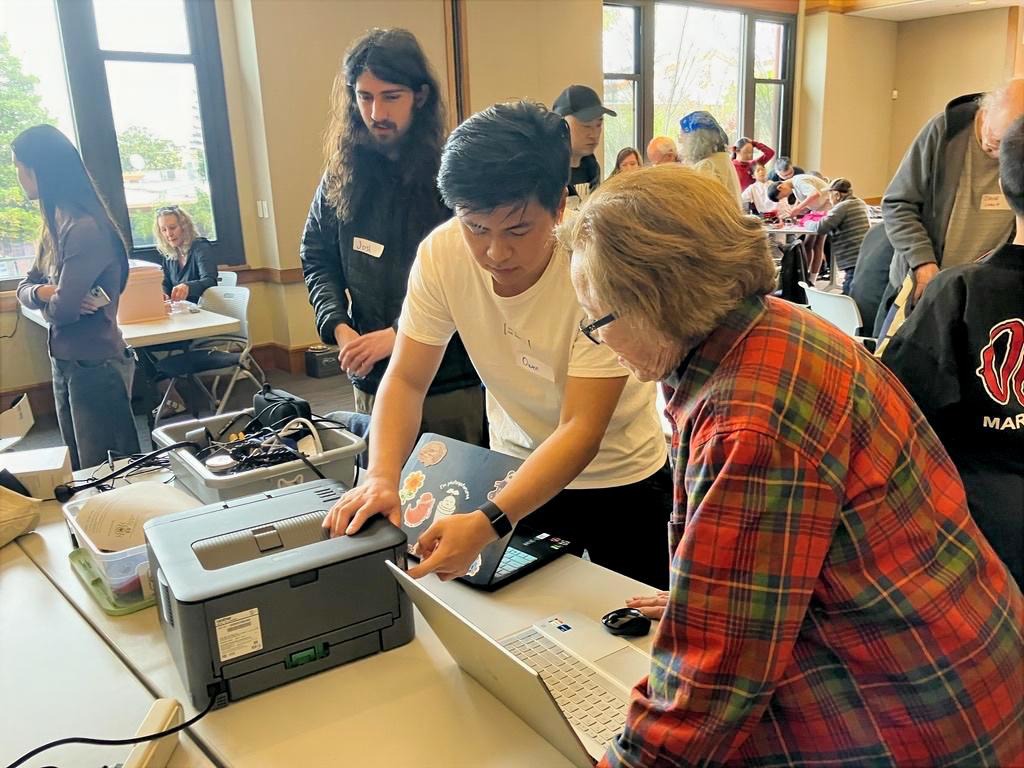
Fixit Clinics are fun community-based workshops where neighbors, friends, and families work collectively to learn how to repair broken items. We’ll provide a workspace, specialty tools, and volunteer Fixit Coaches to help you troubleshoot and provide routine maintenance to your household items and appliances! Register at https://bit.ly/itemcheckin.
Interested in being a Fixit Coach?
It’s easy! Provide participants with 1) guidance on tools and 2) encouragement to investigate their broken item. Let them talk about how they used it and how it broke. That often provides valuable hints as to what’s wrong. See how much you can do without actually handling the item. Empower the item’s owner to do the troubleshooting and disassembly. Register to be a Fixit Coach here.
This event is hosted in partnership with the San Mateo County Libraries.