

Cost Plans
Download the cost plans to better understand strategies and costs to decarbonize existing single-family homes.


Additional Resources and Considerations
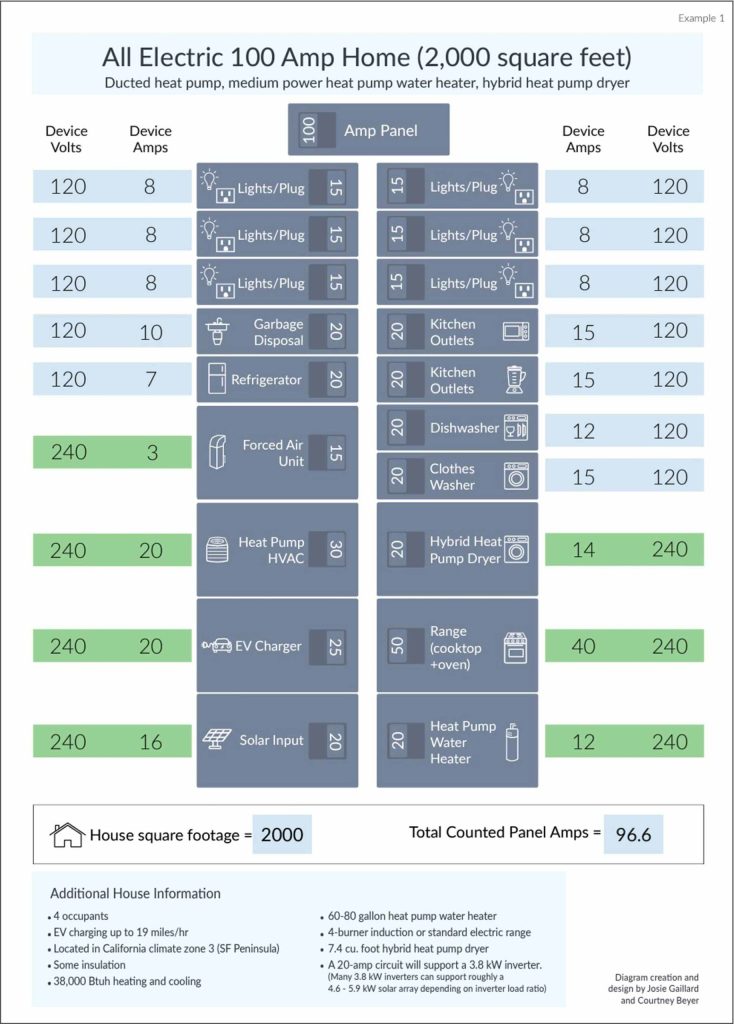
Most homes do not use the majority of their panel capacity, leaving significant room for homes to upgrade to all electric appliances without upsizing their panel. If a home is under 2,000 square feet a 100 amp electrical panel should suffice and it is unlikely that an electrical panel needs an upgrade. Understanding what appliances work best for your panel size is essential in avoiding up to $5k in unnecessary electrical panel upgrades. Panel optimization favors power-efficient devices with low rated amps. Panel optimization also provides a roadmap for building owners and helps guide tradespeople.
Considerations
- Have your electrification plan ready so you know how much panel amperage you are saving for each future need (heating, water heating, 240 V charging, cooking, drying).
- Actively participate in device and appliance selection with the contractors.
- Contractors will need to know the maximum nameplate amps or watts you are allocating for the device, and if the circuit is installed.
- Install circuits and space for controls if needed.
- Think of the EV as the “shock absorber” in the plan.
- 120V charging is common.
- Don’t put yourself into an expensive corner by picking incorrect equipment and not planning your electrification. You could end up upsizing your electrical panel when you do not need to.
- Don’t wait until your water heater, furnace, dryer or cooktop fails to install circuits. Be proactive, pre-wire for electrification.
- Don’t install power hogs, like 50-amp EV chargers.
- Don’t oversize your HVAC equipment “just to be safe.”
- Don’t undersize your heat pump water heater.
It is a good idea to get three quotes from different contractors. Here is what you can expect from them:


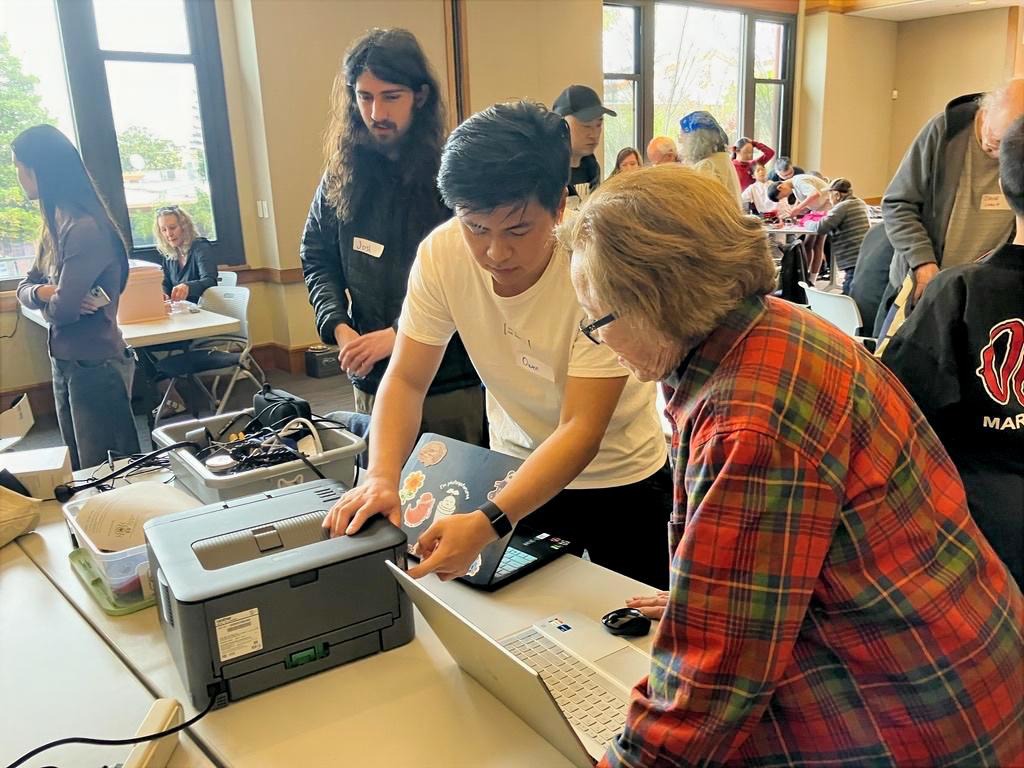
Fixit Clinics are fun community-based workshops where neighbors, friends, and families work collectively to learn how to repair broken items. We’ll provide a workspace, specialty tools, and volunteer Fixit Coaches to help you troubleshoot and provide routine maintenance to your household items and appliances!
Register at https://bit.ly/itemcheckin.
Interested in being a Fixit Coach?
It’s easy! Provide participants with 1) guidance on tools and 2) encouragement to investigate their broken item. Let them talk about how they used it and how it broke. That often provides valuable hints as to what’s wrong. See how much you can do without actually handling the item. Empower the item’s owner to do the troubleshooting and disassembly. Register to be a Fixit Coach here.
This event is hosted in partnership with the San Mateo County Libraries.

Climate Action in Your Kitchen: How to Prevent…

